Adalo
Contact
Adalo
Visual no-code builder publishing native iOS & Android apps with 200+ components, Ada AI assistant, flat-rate pricing.

Adalo as a Replit Alternative: Comparison & Decision Guide (2026)
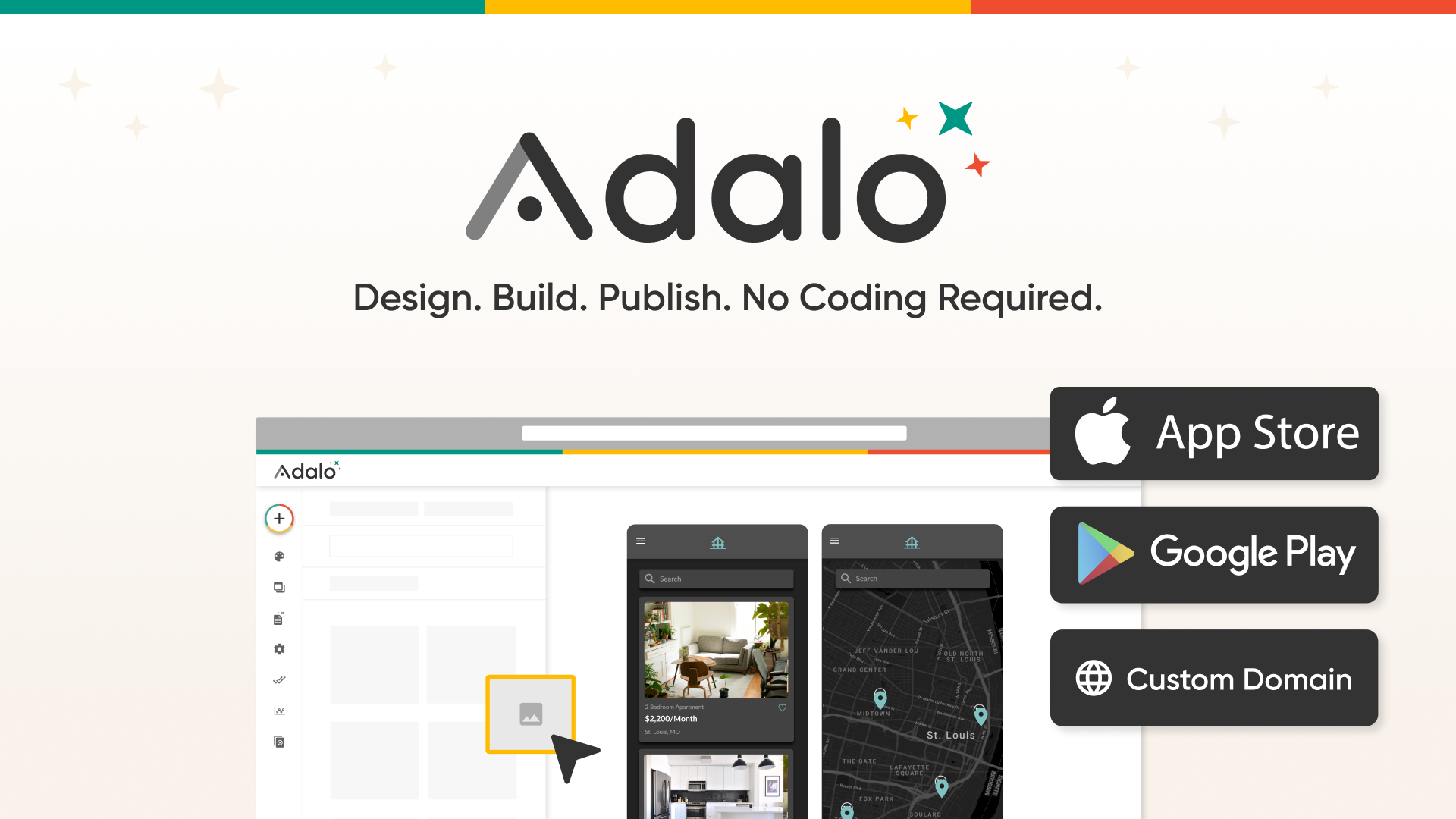
Adalo is a visual no-code app builder that publishes native iOS and Android apps — making it a genuinely distinct Replit alternative for non-technical founders who need real App Store presence without writing code. Where Replit is a developer's browser IDE, Adalo is a drag-and-drop visual builder with Ada, its AI assistant, and a 200+ component library that handles the mobile app creation process end-to-end, including publishing to both app stores.
The tradeoff: you gain the fastest path to a native mobile app for a non-developer, with no usage-based billing surprises and a clear per-seat pricing model. You lose all developer flexibility — custom code, complex backend logic, and any requirement that exceeds Adalo's no-code component library are not served here.
If your project requires a web application, complex custom logic, or developer tooling, Adalo is not the right platform. It is purpose-built for non-technical founders shipping native mobile apps through visual building.
Adalo vs. Replit: Quick Comparison
| Decision area | Adalo | Replit |
|---|---|---|
| Primary approach | Visual no-code drag-and-drop native mobile app builder | Code-first browser IDE with AI assist and web deployment |
| Output stack | Native iOS app, native Android app, web app (same project) | Web, backend, scripts — any language |
| AI capability | Ada AI assistant for building guidance | Ghostwriter — code completion, generation, chat |
| Visual editing | Core feature — drag-and-drop with 200+ components | Minimal — code-first, no visual drag-and-drop |
| Figma import | Not publicly documented | Not supported |
| Deployment | App Store (iOS), Google Play (Android), web publish | Replit-hosted web; no native mobile publishing |
| Database | Adalo's built-in database; external API connections | Replit DB (key-value); PostgreSQL via add-ons |
| Authentication | Built-in user auth — core feature | Not built-in; via third-party libraries |
| Mobile support | Full native iOS and Android publishing — core product | No native mobile app publishing |
| Git/GitHub workflow | Not applicable — no-code platform | GitHub import/export supported |
| Code export / portability | No code export — proprietary platform lock-in | Full code access; can export and self-host |
| Collaboration | Team collaboration on app builder; user roles in published app | Real-time multiplayer code collaboration |
| Error handling / debugging | No code debugging; UI-level validation and testing preview | Built-in debugger, console, error highlighting |
| Record cap | 500 records/app on Free; more on paid plans | No equivalent record limit |
| Pricing model | Seat-based, no usage-based charges | Seat-based with compute limits |
| Free plan | Yes — 500 records/app, Adalo branding | Yes — limited compute, public Repls only |
| Paid plans | Starter $36/mo, Professional $52/mo, Team $160/mo | Core $25/mo; Teams $40+/mo |
What Adalo Does Differently
True Native iOS + Android Publishing — No Code Required
Adalo's primary differentiator is delivering genuinely native iOS and Android apps through a visual no-code interface. This is not a mobile-responsive web app wrapped in a browser view — Adalo publishes actual native apps to the App Store and Google Play. For non-technical founders who need real mobile app distribution, this is the core reason to evaluate Adalo over any web-only builder or IDE.
Replit has no native mobile publishing path. A developer using Replit would need to build a React Native or Flutter project separately, configure app store accounts, and manage a separate CI/CD pipeline. Adalo handles all of this as a built-in workflow.
No Usage-Based Billing — Predictable Cost Model
Adalo explicitly markets that paid plans have no usage-based charges. You pay a flat monthly seat rate: Starter at $36/mo, Professional at $52/mo, Team at $160/mo. This is a meaningful practical advantage over tools with credit-based pricing, AI usage add-ons, or compute-based metering — all of which introduce cost unpredictability at scale.
For solo founders or small teams building and maintaining a mobile app over time, knowing the monthly cost won't spike due to usage patterns removes a planning burden that more complex pricing models introduce.
Ada AI Assistant for Guided Building
Adalo's Ada AI assistant provides guided assistance for building flows, components, and logic within the visual builder. This is different from Replit's Ghostwriter, which assists with code writing — Ada assists with no-code app construction decisions, making it more accessible for builders who don't know what they don't know about app architecture.
The practical implication: a first-time app builder with no coding experience can get meaningful guidance from Ada rather than facing an empty canvas. Replit's AI assistance assumes coding intent and vocabulary.
200+ Component Library Including Cross-Platform Output
Adalo's 200+ component library covers the most common mobile app patterns: lists, forms, maps, charts, cameras, notifications, and more. A single project in Adalo can publish to iOS, Android, and web simultaneously — giving you three distribution channels from one builder. For founders who want to test mobile and web in parallel without maintaining separate codebases, this is a significant operational simplification.
Known Limitations
- No code export — full platform lock-in: Adalo does not export your app as code. If you outgrow the platform's component library or logic capabilities, you cannot migrate your existing app — you must rebuild it. This is a critical long-term risk for products with complex growth plans.
- Logic ceiling for complex apps: Adalo handles standard mobile app patterns (CRUD, navigation, user auth, basic workflows) well. Custom business logic, server-side computations, third-party integrations not in the component library, and complex data relationships hit a ceiling. Replit has no equivalent logic ceiling.
- Record limits even on paid plans: Free tier is capped at 500 records per app. Paid tiers increase this but still impose record caps that don't exist in code-based platforms. For apps that need to store significant amounts of user-generated data, verify current record limits before committing.
- Higher starting price than Replit Core: Starter at $36/mo and Professional at $52/mo are more expensive than Replit Core at $25/mo. For a solo developer comparing entry-level costs, Replit is cheaper — though the comparison is somewhat misleading given the different outputs and audiences.
- App store publishing process is external: While Adalo handles the build and submission workflow, you still need Apple Developer ($99/yr) and Google Play ($25 one-time) accounts to publish. This is not a cost Adalo controls, but it's a prerequisite that some founders overlook.
- Performance and customization trade-offs: Native apps built with visual no-code tools may have performance characteristics different from hand-coded native apps. For apps with complex animations, real-time features, or high-performance requirements, the no-code approach has inherent trade-offs versus a React Native or Swift/Kotlin codebase.
Who Should Choose Adalo Over Replit?
- Non-technical founders who need native mobile app presence: If your product requires an App Store listing and you don't have mobile development resources, Adalo is the fastest path to a published native app without engineering involvement. Replit cannot deliver this.
- Solo builders validating a mobile consumer app idea: For an MVP on iOS and Android with auth, user accounts, and basic CRUD — Adalo's visual builder can deliver this in days rather than the weeks a React Native codebase on Replit would take to configure and deploy.
- Teams where cost predictability matters: Adalo's no-usage-based-billing model makes monthly costs predictable. For bootstrap founders or small teams running on tight budgets, not having to worry about credit consumption or compute spikes is a real operational benefit.
- Operators building simple internal mobile tools: Field teams, inspection workflows, data collection apps — these are common Adalo use cases that benefit from native mobile access (camera, GPS, notifications) that a web app would struggle to match.
When Replit Is Still the Better Choice
- You're building a web application: Adalo's primary value is native mobile. For web apps, Replit's code-first approach produces more flexible, scalable, and developer-maintainable outputs.
- You need custom logic or API integrations beyond Adalo's component library: Complex workflows, custom business rules, or integration with obscure APIs require code. Replit can implement any logic; Adalo is limited to what its no-code components support.
- Code ownership is important to you: Replit gives you full source code. Adalo gives you a platform-locked app. If your product has long-term value and you may need to migrate infrastructure, code ownership is the safer foundation.
- Your team includes developers: Developers will not find Adalo productive — it's a no-code tool. Mixed teams should choose platforms that serve both technical and non-technical members, or separate tools by role.
- Your app will have significant data volume: Adalo's record limits and no-code database constraints don't scale as predictably as a code-based backend with a proper database. Replit + PostgreSQL has no equivalent record ceiling.
Pricing Comparison & Cost at Scale
Adalo Plan Overview
- Free: 500 records/app; Adalo branding on published app
- Starter: $36/mo — removes branding, more records
- Professional: $52/mo — more capacity, priority support
- Team: $160/mo — collaboration features, higher limits
- No usage-based charges on paid plans
- Additional costs to factor in: Apple Developer Program ($99/yr), Google Play Developer ($25 one-time)
Replit Plan Overview
- Free: Public Repls, limited compute
- Core: $25/mo per user
- Teams: From $40/mo per user
| Scenario | Adalo | Replit | Notes |
|---|---|---|---|
| Solo founder, native mobile MVP | $36/mo Starter + $99/yr Apple + $25 Google | Cannot publish native mobile apps | Adalo is the only option here |
| Solo developer, web app | Not the right tool — web is secondary output | $25/mo Core | Replit wins for web; Adalo not relevant |
| 3-person team, mobile product | $160/mo Team or 3x Professional ($156/mo) | $75+/mo for web; no mobile | Adalo more expensive but delivers mobile output Replit can't |
| App with high data volume | Hits record limits — may require plan upgrades or restructuring | Scales with database choice | Replit + proper DB wins at data scale |
Prices are subject to change. Check the official Adalo pricing page for current details. App Store developer fees are external costs not included in Adalo's pricing. No usage-based charges apply to Adalo paid plans.
How Adalo Compares to Other Options
- vs. a0.dev: Both target native mobile apps for non-developers. a0.dev uses AI generation (React Native codebase); Adalo uses visual drag-and-drop. a0.dev is AI-first and more code-adjacent; Adalo is more visual with a larger established component library. Adalo has more documented pricing and a mature product; a0.dev is a newer YC startup with more uncertainty.
- vs. Glide: Glide builds data-driven web apps; Adalo builds native mobile and web apps. If App Store presence matters, Adalo is the right choice. If your starting point is spreadsheet data and web is sufficient, Glide is faster to configure.
- vs. Softr: Softr focuses on web portals and internal tools from spreadsheet data; Adalo focuses on native mobile apps. Different primary use cases. Softr has stronger auth and data connector options for web-based business apps; Adalo wins decisively when native mobile publishing is required.
FAQ
Is Adalo free?
Yes, Adalo has a free plan limited to 500 records per app and includes Adalo branding on published apps. Paid plans start at $36/month (Starter). App Store publishing requires separate Apple Developer ($99/yr) and Google Play ($25 one-time) accounts, which are not part of Adalo's pricing.
Can Adalo replace Replit?
Only for non-technical users building native mobile apps. Adalo cannot replace Replit for web development, backend code, or any developer use case. For founders who need App Store presence and have no mobile coding resources, Adalo is more relevant than Replit for that specific need.
Does Adalo publish real native apps?
Yes. Adalo publishes to the App Store (iOS) and Google Play (Android) — not browser-wrapped web apps, but native applications. You need your own Apple Developer and Google Play developer accounts to complete the submission process.
Is Adalo good for beginners?
Yes — for non-technical beginners who want to build native mobile apps. The visual drag-and-drop interface and Ada AI assistant are designed for users without coding experience. Technical developers seeking full-stack flexibility should use a code-first platform like Replit instead.
What is the lock-in risk with Adalo?
High. Adalo does not export your app as code. If you need to migrate to a custom codebase — due to feature requirements exceeding the component library, performance needs, or platform changes — you must rebuild your app from scratch. Plan for this risk if your product has significant long-term growth ambitions.